Nothing Left Behind: Belongings Discipline for the London Sensual Massage Client

Photo: John Haynes, CC BY-SA 2.0, via Wikimedia Commons
Belongings are rarely the first thing a client considers when booking a sensual massage in London. Attention tends to go to the therapist, the setting, the duration and the journey. Yet the way a coat is handled, a phone is placed or a bag is left can shape the tone of an appointment quite as much as punctuality or payment. Good etiquette is not only about how one speaks to a therapist; it is also about how one occupies the room. A small amount of forethought prevents the awkward fumblings, the misplaced keys and the late-night return for a forgotten handset that no discreet client wants.
The First Two Minutes: A Place for Everything
The doorstep handover sets the pattern. A client who arrives carrying a wet umbrella, a bulky tote and a phone in one hand tends to create a small scene before the appointment has begun. The more considered approach is to arrive with belongings already consolidated: one bag, one coat, pockets not overflowing. On entry, ask where the therapist would prefer items to go rather than assuming a chair or a hook. Most London studios and private treatment rooms have an established place for outerwear, and a therapist will usually indicate it without being asked. Accepting that direction is a quiet courtesy. It also protects the client, because belongings placed where the therapist expects them are far less likely to be disturbed or forgotten.
The same principle applies in a hotel outcall. A guest room is not a studio, and the therapist may have limited space to work with. Keeping coats and bags to one defined area, rather than distributing them across the bed and the desk, is both practical and respectful. It signals that the client understands the room is shared for a purpose and that the therapist's working area should remain clear.
The Pocket Audit: What Should Not Travel With You
Discretion begins before the appointment. A wallet stuffed with receipts, a work lanyard, a building pass or a phone case holding an address card all carry small identifying details. For the client who values privacy, a modest audit before leaving home is worthwhile. Remove anything that is not needed for the booking. Carry payment in a simple form, keep identification to what is genuinely necessary, and avoid leaving a trail of small paper items in a treatment room. The therapist is not interested in a client's employment or home address, and there is no reason to make either visible.
Valuables deserve a moment's thought as well. A watch, a ring or a pair of cufflinks can be placed in a coat pocket or bag, but only if the client will remember them. The safer habit is to keep small valuables on the person or in a single zipped compartment, not scattered on a side table. Therapists are accustomed to clients removing jewellery, and a brief word about where it has been placed avoids any uncertainty later.
The Phone: Silent, Face Down, Out of Reach
A phone is the most commonly mishandled item in any appointment. It should be silenced before arrival, not during the first minutes of the session. It should not be left face up on a nearby surface where notifications can illuminate the room, and it should not be carried into the treatment area if the therapist has indicated a place for personal items. The discreet client puts the phone in a coat pocket or bag, face down, and leaves it there. Taking calls, checking messages or photographing a room are all breaches of the atmosphere a sensual massage depends on. If a client is expecting an urgent call, the matter should be mentioned at the start so that the therapist can make an informed decision about how to proceed. Otherwise, the phone should be out of sight and out of mind.
Keys, Wallet and Watch: The Small-Item Discipline
Small items cause the largest proportion of departures that go wrong. Keys are the usual culprit, followed by wallets and watches. A simple discipline helps: keep all small items in one place, whether that is an inside coat pocket or a zipped section of a bag. Do not distribute them between trouser pockets, a bedside table and a coat hook. A single location means a single check at the end. It also reduces the risk of an item slipping between cushions or being left behind in a dimly lit room.
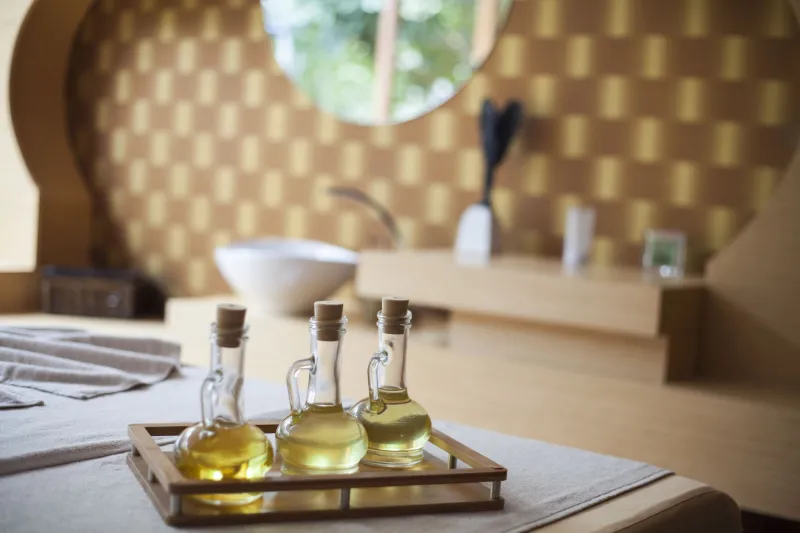
Where a therapist offers a tray or a small dish for personal effects, use it. These are provided precisely to keep valuables together. Thank the therapist for the courtesy, and collect everything from the tray before dressing. It is a small ritual, but it removes the guesswork from the final minutes.
The Umbrella and the London Weather
London weather adds a particular complication. A wet umbrella cannot be propped against a wall without leaving a puddle, and it should not be shaken out in a doorway. Most therapists will have a habitual place for umbrellas, often near the entrance. Ask, or follow the therapist's indication, and leave the umbrella there rather than carrying it through the premises. A compact umbrella that fits inside a bag is simpler still. For clients visiting on a rainy evening in 2026, the umbrella is worth thinking about before the door opens, not after.
The Final Sweep: Ninety Seconds Before You Leave
A calm departure includes a brief, systematic check. Coat pockets first, then bag, then the place where the phone was left. Look at the chair or hook where the coat was hung, the surface where the tray was placed and the floor beneath. Check that a charging cable, if one was used, has been unplugged and returned. Check that no receipts, tissues or other small items have been left behind. Ninety seconds of quiet checking is preferable to a rushed exit and a later telephone call to the therapist.
The forgotten-phone dash is almost always avoidable. It happens when a phone is left on a bedside table, under a cushion or in a coat that has been moved. Keeping the phone in one known place, and checking that place before putting on the coat, removes the risk. If something is discovered missing after departure, the correct response is a brief, polite message to the therapist, not an immediate return to the door. Most therapists will hold a found item discreetly and arrange a sensible collection.
Leaving Without Fuss
Belongings management is not a glamorous subject, but it is part of the quiet competence that makes a good client. Arrive consolidated, ask where things should go, keep small items together, silence the phone, deal with the umbrella and perform a final sweep. None of this is elaborate. It is simply the practice of treating a therapist's room with the same consideration one would expect in return. A client who leaves nothing behind, and who departs without commotion, is remembered well. In a discreet London market, that reputation is worth more than any single appointment.