Reading Between the Lines: A Londoner's Method for Weighing Sensual Massage Reviews

Photo: Nicholas Mutton, CC BY-SA 2.0, via Wikimedia Commons
Anyone who books sensual massage in London with any regularity will tell you the same thing eventually: the number of stars beside a listing tells you remarkably little. A five can belong to a quiet studio in Zone 3 that has never been photographed properly, and a five can equally be produced by three hurried clicks from people who were never going to say otherwise. The rating is a headline. What matters is the text beneath it, and more precisely the shape that several texts form when you read them side by side.
None of this requires cynicism. It requires literacy. Reviews are the closest thing this market has to a shared record, and like any record they reward a reader who knows what to look for.
Why the star is the least informative mark on the page
A rating compresses an hour of experience into a single digit. In doing so it discards everything that would actually help you: whether the therapist was punctual, whether the room was warm, whether the conversation before the massage was handled with any skill, whether the address was as discreet as advertised. Two clients can both award five stars while describing fundamentally different appointments. Only one of those descriptions is likely to resemble the evening you are hoping to have.
Treat the average as a filter, not a verdict. It is useful for excluding the plainly neglected listing. It is useless for choosing between the plausible ones.
What genuine detail looks like
Specificity is difficult to fake and easy to recognise. A genuine account tends to contain at least a few particulars that no one would invent: the manner in which a therapist explained the format of the session, the temperature of the room, the fact that a shower was offered without being requested, the precise way a boundary was confirmed before anything began. These are the details a person remembers because they shaped the hour.
Look, too, for proportionality. A well-written review acknowledges that a session was good without insisting it was transformative. It may mention a minor friction — a booking confirmation that arrived late, a slightly rushed greeting — and still conclude positively. That balance is a far stronger signal of authenticity than unbroken enthusiasm.
The tell-tale signs of over-polish
At the other end of the scale sits the review that reads as though it were written for the listing rather than about it. Watch for a handful of recurring habits: superlatives stacked without evidence, praise directed at the business rather than the experience, and a suspicious uniformity of vocabulary across several entries published within a short window.
None of this is proof of anything. But a wall of reviews that all reach for the same adjectives, all arrive in the same fortnight, and all decline to mention a single concrete feature of the appointment should be weighted accordingly. The same applies to reviews that describe a service the listing does not advertise, or describe it in language lifted almost verbatim from the advertisement itself.
Vagueness is not the same as discretion
Here the London reader needs to be careful, because this market attracts a legitimate reluctance to be specific. Many clients write briefly on purpose: they are protecting a therapist, protecting themselves, or simply declining to publish an account of an intimate hour. A short review is not automatically a hollow one.
The distinction lies in what the brevity is doing. A discreet review often says something concrete and modest — that the studio was clean, that the therapist was professional, that the experience matched the description — and then stops. A hollow review says nothing and repeats it at length. If you cannot extract a single verifiable fact from a paragraph, the paragraph is not being discreet. It is being empty.
Matching the pattern to your own priorities
Reviews are most useful when read against your own list of what matters rather than against a general notion of quality. Three priorities dominate most bookings in this city, and each announces itself differently in text.
Discretion
Scan for accounts that mention the practicalities without drama: a side entrance, a waiting area that is not overlooked, a booking process that did not involve a string of messages. A single sentence on this subject from one client is worth more than a paragraph of general reassurance.
Communication
Look for evidence that questions were answered before the appointment and boundaries were discussed without awkwardness. Reviews that quote a therapist's manner — unhurried, clear, willing to explain — tell you something the photographs cannot.
Setting
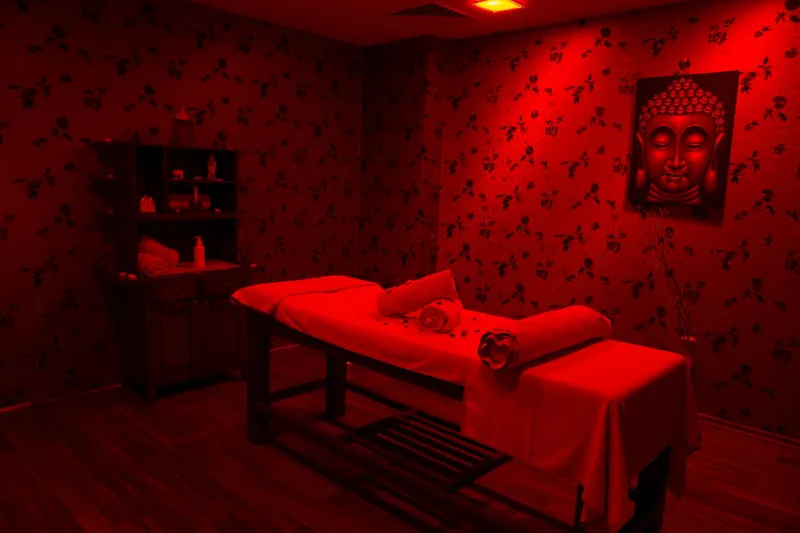
Descriptions of the room itself are quietly revealing. Clients who mention warmth, cleanliness, lighting, or the absence of street noise are telling you the appointment was designed rather than merely hosted. Where several reviewers independently mention the same physical detail, treat that as reliable.
A habit worth forming
Read four or five accounts rather than one. Note where they agree. Note where the disagreements cluster, and ask whether those are the kind of disagreements that would matter to you. A listing with consistent praise for communication and mixed feelings about the building is giving you a forecast, and it is a more honest one than any average could provide.
The regular client is not the one who has found a perfect listing. The regular client is the one who has learned to read the record before turning up, and who therefore arrives with reasonable expectations rather than hopeful ones.